By Nyandano Tshikororo
7 min Read

This can be a natural result of digestion patterns and sleep cycles. Some types of foods and the timing of meals can also make people feel especially tired after a meal. A decrease in energy levels after eating is called postprandial somnolence.
Researchers have different theories about the cause of tiredness after eating, but they generally agree that it is a natural response and not usually a cause for concern.
● Eating Foods rich in protein and carbohydrates.

An amino acid called tryptophan, which occurs in many protein-rich foods, helps the body produce serotonin. Carbohydrates help the body absorb tryptophan. For these reasons, eating a meal rich in both protein and carbohydrates may make a person feel sleepy. Tryptophan occurs in foods that are rich in protein.
“Oftentimes, when you’re eating a meal rich in carbohydrates and protein, you may feel sleepier because you have an uptake of tryptophan from the protein and then an increase of serotonin,”
a registered dieticians Julia Zumpano, RD explains. Eating also causes your blood sugar levels to rise, which can lead to a decrease in energy.
Tryptophan occurs in foods that are rich in protein. These include:
• salmon
• poultry
• eggs
• spinach
• seeds
• milk
• soy products
• cheese
Foods that contain high levels of carbohydrates include:
• pasta
• rice
• white bread and crackers
• cakes, cookies, donuts, and muffins
• corn cobs
• milk
• sugar and candy
And if you’re eating larger quantities, it can overload your digestive system in addition to releasing hormones that can cause tiredness, so it’s best to eat a well-balanced meal that contains whole foods, protein, fibre and healthy fats.
● How much food you eat
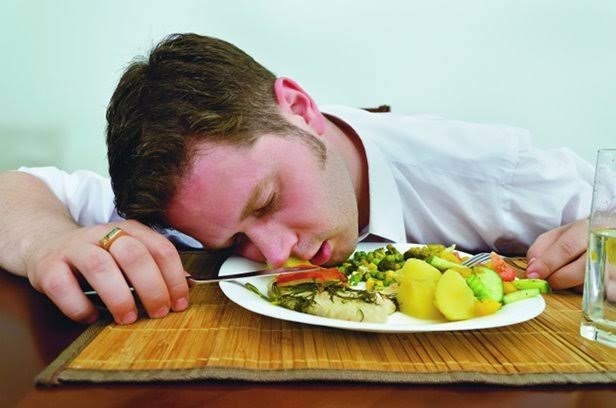
A person may be likelier to experience postprandial somnolence after a large meal.
People who eat larger lunches may experience more of an afternoon slump than those who eat less at midday. Eating causes blood sugar to rise, and a dip in energy may follow.
Other factors can contribute to tiredness after eating:
• poor sleep at night, which can lead to tiredness throughout the day
• drinking alcohol with a meal, especially during the daytime
How to stop the tiredness after an afternoon meal
• Eat little and often.
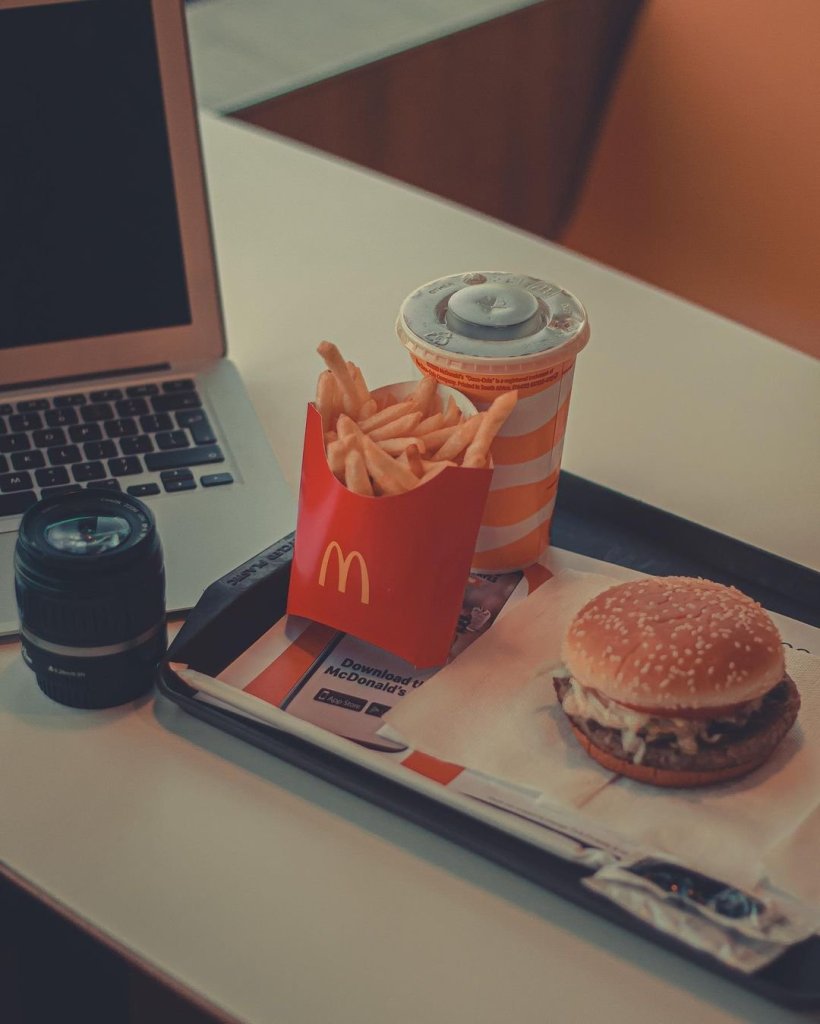
Rather than eating big meals, eat smaller meals and snacks every few hours to keep up energy levels. A piece of fruit or a handful of nuts should be enough to cure an energy dip.
• Get good-quality sleep.

A person who gets enough sleep at night is less likely to experience a significant post-lunch energy dip. Getting sufficient sleep at night can reduce excessive daytime sleepiness, which may translate to less drowsiness after a meal.
• Go for a walk.

Getting light exercise during the day, especially after eating, can help people feel less tired. Research suggests that a short walk after eating helps manage a person’s blood glucose, or blood sugar, levels. Moderate daily exercise can also reduce gas and bloating, improve sleep, and boost heart health.
If a person is continually tired after eating, and it is affecting their quality of life, they should speak to a doctor.

 GenZ Updates
Leave a comment